A Sofreh Aghd is one of the most intimate and meaningful expressions of a Persian wedding. It is the setting around which a couple makes their vows, but it is also a composition of family traditions, symbolism, beauty and memory. The most successful luxury Sofreh Aghd design does not simply look impressive in photographs; it feels considered, personal and completely at home within the celebration.
Whether the ceremony is taking place in a London ballroom, an English country house, a villa in Italy, a hotel in Turkey or a family venue in Iran, the same principle applies: begin with the meaning, then let the design express it with elegance.
Begin with the meaning, not the decoration
Before choosing flowers, fabrics or finishes, talk through what the Sofreh Aghd means to the couple and their families. Persian wedding customs are rich, but the details are not identical in every family or region. Some couples wish to preserve a very traditional arrangement; others want a contemporary interpretation that keeps a few cherished elements at its heart.
Ask which objects are essential, whether a family heirloom should be included, and whether there are particular colours, blessings or customs that matter to parents and grandparents. This conversation creates a design brief with substance. It also avoids treating meaningful objects as styling accessories.
For couples exploring the wider traditions of an Iranian celebration, our guide to Persian and Iranian weddings offers a broader introduction to the ceremony and the many ways it can be celebrated.
Create a visual language that belongs to the couple
A refined Sofreh Aghd should feel connected to the wedding as a whole. Its palette can echo the bridal look, the venue architecture, the reception flowers or a detail that has personal meaning for the couple. The aim is not to make every element identical, but to create a clear visual relationship between the ceremony and the rest of the day.
Ivory, champagne and soft neutrals
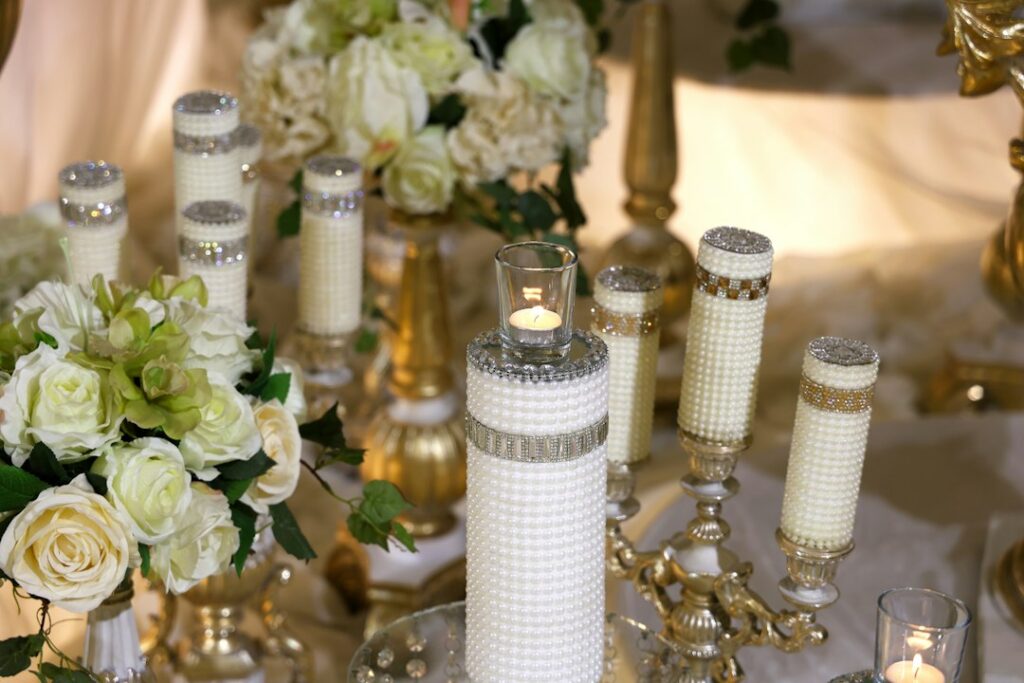
Warm ivory, pearl, champagne and soft gold create a luminous, timeless foundation. These tones work particularly well in elegant hotels and historic venues, where gentle contrast allows the ceremony objects and floral details to remain visible without competing with the room.
Soft colour with a little depth
Blush, dusty rose, muted sage, pale blue or warm taupe can bring individuality while keeping the composition calm. For a richer interpretation, deep burgundy, forest green or jewel tones can be used selectively against antique gold or darker natural textures. A restrained accent is often more memorable than a palette in which every colour asks for attention.
Give the Sofreh Aghd structure and proportion
Luxury is as much about proportion as it is about materials. The table or platform should be scaled to the room, the number of guests and the ceremony layout. A design that looks beautiful in a studio can feel lost in a large ballroom, while an elaborate installation may overwhelm an intimate private dining room.
Consider the view from several positions: the couple’s seats, the celebrant, the front rows, the entrance and the main photography angles. The mirror should be positioned thoughtfully, reflective surfaces should not create distracting glare, and taller pieces should frame rather than obscure the couple. Leave enough clear space for the ceremony objects to be seen and for the couple to move comfortably.
In venues with impressive architecture, the Sofreh Aghd should complement the setting rather than compete with it. A historic ceiling, a garden view or a dramatic staircase may already provide visual impact. In a more neutral room, the ceremony installation can become the defining focal point.
Choose traditional elements with intention
Many Sofreh Aghd arrangements include objects associated with wishes for light, sweetness, abundance, health and a joyful life together. A mirror and candles are often used to evoke light and clarity; honey may represent sweetness; and other items, such as eggs, nuts, fruit, coins, herbs or flowers, can carry meanings connected with fertility, prosperity, renewal or abundance.
Interpretations vary, so the couple’s own family customs should guide the final selection. It is not necessary to include every possible symbolic object. A carefully edited arrangement, in which each item has a reason to be there, can feel more meaningful and more beautiful than a crowded display.
Where a particular object has been passed down through the family, make it part of the design rather than hiding it among decorative details. Its age, patina or personal history may be more valuable than a perfectly matched new accessory.
Use flowers to frame the ceremony, not conceal it
Flowers bring softness, movement and scale to a Sofreh Aghd. Their role is to frame the important details and create a sense of occasion, while keeping the couple and the symbolic objects clearly visible.
Low, layered arrangements can create an intimate feeling around the table. A more architectural floral design may suit a grand venue, particularly when it is balanced with open space and clean sightlines. Choose flowers that are suitable for the season and the destination, and consider fragrance as well as appearance: a heavily scented installation can become overwhelming in a small or warm room.
For a polished result, repeat a small number of floral varieties and foliage textures rather than introducing too many competing shapes. The finish should feel abundant where it needs to, but never accidental.
Let lighting and materials do quiet work
Lighting can transform the atmosphere of the Aghd ceremony. Candlelight creates warmth and intimacy; soft, directional lighting can bring out the texture of fabric, glass and flowers; and carefully placed highlights can make a mirror or crystal detail glow without producing harsh reflections in photographs.
Material choices matter just as much. Silk-like fabrics, fine linen, polished metal, crystal, glass and carefully selected ceramics can create a layered finish. Combine reflective surfaces with matte textures so the arrangement has depth. If the venue restricts naked flames, use an approved alternative and confirm the rules with the venue team before the design is finalised.
Personalise the design without losing its cultural heart
Personalisation works best when it is subtle and specific. A family-owned mirror, a line of Persian poetry, a meaningful colour, a discreet monogram or a small detail inspired by the couple’s story can make the Sofreh Aghd unmistakably theirs.
For couples bringing together different cultures, the ceremony can acknowledge both backgrounds without turning the Sofreh into a collection of unrelated motifs. Choose one or two thoughtful references and give them room to be appreciated. The result should honour Persian heritage while reflecting the people beginning their life together.
Plan the practical details around the venue and destination
A beautiful design needs a reliable installation plan. Before confirming the final layout, check the venue’s access times, loading arrangements, lift dimensions, ceiling height, floor protection requirements and restrictions on candles, hanging décor or fixing points. Confirm who will be responsible for the ceremony items before, during and after the event.
For a wedding in London or elsewhere in the UK, allow time for delivery, installation, venue inspection and a final styling check before guests arrive. For celebrations in Europe, Turkey or Iran, consider which items can be sourced locally and which need to travel. Fragile heirlooms, specialist fabrics and personal ceremonial objects may require secure packing, customs planning and a named person responsible for them.
Outdoor ceremonies need an additional plan for wind, changing light, uneven ground and temperature. A design should be beautiful in the conditions the venue is likely to provide, not only in the original mood board.
A considered Sofreh Aghd begins with the right questions
When planning the ceremony, discuss these points with your wedding planner and design team:
- Which traditions and symbolic objects are important to the couple and their families?
- What is the ceremony space, and where will guests, the celebrant and photographers be positioned?
- Which colours and materials will connect the Sofreh Aghd to the wider wedding design?
- Are there family heirlooms or personal details that need special handling?
- What restrictions apply to candles, installation, access, sound or outdoor use?
- Who will style, check and look after the Sofreh before and during the ceremony?
These decisions are easier to make early, when the venue, ceremony format and overall design are being considered together. They also help the final installation feel effortless on the day.
Frequently asked questions about luxury Sofreh Aghd design
What is a Sofreh Aghd?
A Sofreh Aghd is the ceremonial spread or arrangement used during a Persian wedding Aghd ceremony. It traditionally brings together symbolic objects and decorative elements that express wishes for the couple’s shared life. Its exact contents and customs can vary between families.
Can a Sofreh Aghd be modern while remaining traditional?
Yes. A contemporary design can use a refined palette, modern floral styling and clean lines while retaining the objects and customs that matter to the couple. The key is to agree which traditions should remain central and build the visual design around them.
Which colours are best for a luxury Sofreh Aghd?
There is no single correct palette. Ivory, champagne and soft gold are timeless choices, while muted pastels or deeper jewel tones can create a more individual look. The best palette responds to the venue, the wider wedding design and the couple’s preferences.
Can Shahrzad Wedding design a Sofreh Aghd outside London?
A Sofreh Aghd can be planned as part of a celebration in London, elsewhere in the UK or at a destination venue in Europe, Turkey or Iran. The design and logistics should be tailored to the location, venue requirements and the couple’s family traditions. To discuss your plans, visit our Luxury Persian Sofreh Aghd service or contact Shahrzad Wedding.
A ceremony designed around your story
The most memorable Sofreh Aghd is not necessarily the largest or most elaborate. It is the one in which every detail feels considered: the traditions have meaning, the proportions suit the room, the flowers frame the ceremony and the design reflects the couple with quiet confidence.
At Shahrzad Wedding, we believe that Persian wedding design should honour its cultural heart while leaving room for each couple’s individuality. Explore our Luxury Persian Sofreh Aghd service and wedding portfolio to discover how a thoughtful ceremony setting can become one of the defining moments of a celebration.